Choosing a white paint sounds easy until you’re standing in front of fifty nearly identical swatches. Some look sterile, some turn yellow by afternoon, and others go gray the moment the sun sets. Sherwin-Williams Snowbound (SW 7004) has become a favorite because it avoids most of these problems, and a big reason is its light reflectance. Understanding the snowbound LRV helps explain why this shade feels bright without being harsh, and why designers reach for it in so many different homes.
What LRV Actually Tells You About a Paint Color
LRV stands for Light Reflectance Value, a scale from 0 to 100 that measures how much visible light a painted surface bounces back into a room. A true black sits near zero because it absorbs almost everything, while a perfect white would sit at 100. Most real-world whites land somewhere in the 80s, and that small range matters more than it seems. A difference of just two or three points can change how open, airy, or cozy a space feels, especially in rooms with limited natural light. Painters and interior designers use this number as a practical shortcut, since it predicts brightness far better than a small chip under store lighting ever could.
Breaking Down the Snowbound LRV
The Number Behind the Color
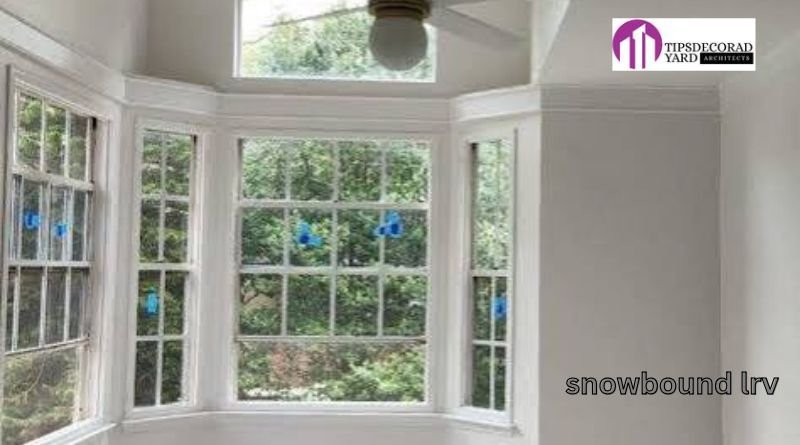
Snowbound carries an LRV of 83, which places it firmly in the bright white category while stopping short of the ultra-crisp whites at the top of the scale. That means it reflects the large majority of the light that hits it, helping a room feel open and clean, yet it keeps enough depth to avoid the glare that pure, high-reflectance whites can create. With the snowbound LRV sitting at 83, walls painted in this shade tend to look luminous in daylight and remain gentle under warm evening lamps, which is exactly the balance most homeowners are hoping for.
Undertones That Keep It Soft
Numbers only tell part of the story, and Snowbound’s undertone is the other half. It leans slightly warm with a subtle gray-beige quality, so it reads as a soft white rather than a stark one. In a north-facing room it can look a touch cooler and calmer, while south-facing rooms bring out its warmer, creamier side. Because the undertone is so restrained, it rarely fights with wood floors, stone counters, or existing furniture. That flexibility is a major reason it works in so many homes.
Where Snowbound Works Best
Living Rooms and Bedrooms
In living spaces and bedrooms, Snowbound creates a quiet backdrop that lets artwork, textiles, and furniture take center stage. It pairs beautifully with natural materials like oak, linen, and woven baskets, and it holds up well next to deeper accent colors such as navy, olive, or charcoal. Because it reflects plenty of light without shouting, it also helps smaller rooms feel more spacious.
Kitchens, Trim, and Cabinets
Kitchens are another strong match. Painted on cabinetry, Snowbound gives a fresh, timeless look that doesn’t feel clinical, and on trim it offers a gentle contrast against slightly darker walls. If you want a monochrome look, using it on both walls and trim creates a seamless, calming effect.
How It Compares to Other Popular Whites
Set beside brighter options like Pure White (LRV 84) or Extra White (LRV 86), Snowbound looks a little warmer and less intense. Next to Alabaster (LRV 82), it appears slightly cooler and more neutral. These small differences are exactly why checking the snowbound LRV against your room’s lighting matters before you commit. A shade that glows in one home can feel flat in another, so always test it in your own space.
Practical Tips Before You Paint
Start by applying a large sample, at least two feet square, on more than one wall, and observe it at morning, midday, and night. Pay attention to how nearby colors, such as green trees outside or a warm wood floor, shift its appearance. Choose your finish carefully too, since matte hides wall imperfections while satin or semi-gloss adds durability for trim and high-traffic areas. Finally, use a quality primer over dark or patchy surfaces so the true color shows through evenly.
Final Thoughts
Snowbound succeeds because it balances brightness and warmth so gracefully. Its reflectance value of 83 keeps rooms feeling light and open, while its soft undertone prevents the sterile look many whites suffer from. Knowing the snowbound LRV gives you a reliable starting point, and testing it at home confirms the rest. If you want a versatile, easygoing white that adapts to almost any style, this one deserves a place on your shortlist.