
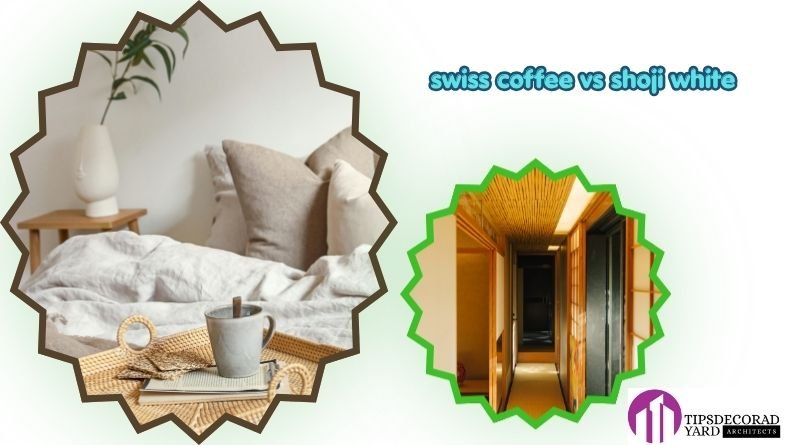
Picking a white paint sounds easy until you actually stand in the store holding two swatches that look almost identical. That’s exactly what happens with swiss coffee vs shoji white, two of the most requested warm whites among homeowners and designers right now. Both promise a soft, cozy neutral, but they behave very differently once they hit your walls. If you’ve been stuck comparing swatches under store lighting and getting nowhere, this guide breaks down the real differences so you can choose with confidence.
What Makes These Two Whites So Popular
Before getting into the swiss coffee vs shoji white debate, it helps to understand why both colors show up on so many “best white paint” lists in the first place. Homeowners want a white that isn’t stark or clinical, something that still feels warm and livable rather than sterile. Both of these shades deliver that softness, which is exactly why they get grouped together so often, even though a closer look reveals distinct personalities.
A Quick Look at Swiss Coffee
Swiss Coffee, made by Benjamin Moore, is an off-white with a gentle cream undertone. It reads soft and inviting without leaning too yellow, which is why it has become a go-to trim and wall color for years. In natural daylight, it can look almost pure white, but as the light dims in the evening, its warmth becomes more noticeable. People who want a white that still feels “warm” without turning beige often land here first.
A Quick Look at Shoji White
Shoji White, from Sherwin-Williams, takes a slightly different approach. It leans a touch greige, meaning it carries subtle gray and warm undertones together. This gives it a more grounded, modern feel compared to the creamier lean of its rival. It tends to hold its tone more consistently across different rooms, which is a big reason designers reach for it in spaces with varied lighting.
Undertones: The Real Difference in Swiss Coffee vs Shoji White
If there’s one factor that decides the swiss coffee vs shoji white debate, it’s undertone behavior. Swiss Coffee’s cream base can occasionally shift toward yellow in rooms with warm incandescent bulbs, especially in smaller or windowless spaces. Shoji White, with its greige base, tends to stay more neutral and doesn’t drift as noticeably. So if your home gets inconsistent light throughout the day, Shoji White’s steadier undertone may save you from surprises.
How Lighting Changes Everything
Paint never looks the same in two different rooms, and that’s especially true here. North-facing rooms, which get cooler, indirect light, tend to make Swiss Coffee look slightly warmer and cozier, while Shoji White can appear a touch cooler and more balanced. South-facing rooms flooded with sunlight often make both colors look brighter and closer to true white. Testing large sample swatches on your actual walls, at different times of day, is still the most reliable way to settle any swiss coffee vs shoji white decision for your specific space.
Room-by-Room Recommendations
For kitchens and bathrooms, where cabinetry and tile often have cool undertones, Shoji White tends to blend more seamlessly. For living rooms, bedrooms, and spaces where you want a softer, huggable feel, Swiss Coffee’s cream warmth usually wins people over. Trim work is another consideration: Swiss Coffee is a favorite for trim precisely because it pairs so easily with a wide range of wall colors without clashing.
Final Verdict
There’s no single winner in the swiss coffee vs shoji white comparison because the “better” choice depends entirely on your lighting, your existing finishes, and the mood you’re going for. If you want something creamy and traditional, Swiss Coffee is hard to beat. If you prefer a steadier, slightly modern neutral that won’t shift dramatically across rooms, Shoji White is the safer bet. Either way, grab sample pots before committing to gallons — a small swatch on your wall tells you more than any online comparison ever could.